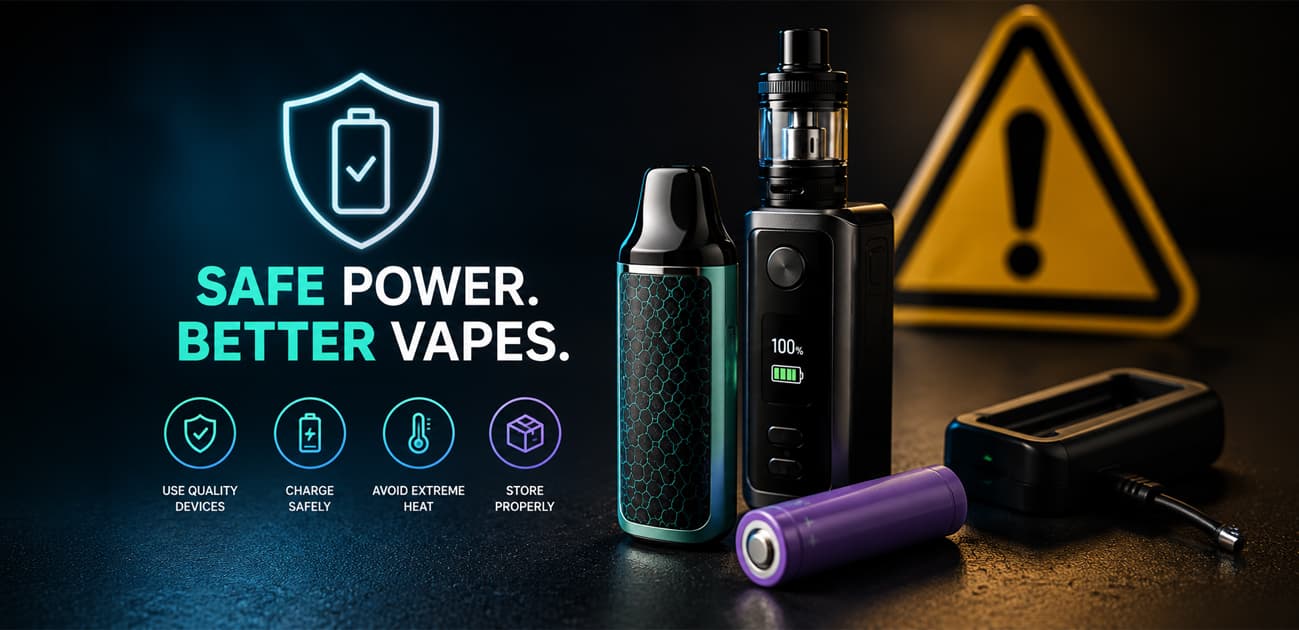
Every rechargeable vape runs on the same core technology as your phone or laptop: a lithium-ion battery. That technology is safe for the overwhelming majority of everyday use, but it does have real rules worth following, especially around charging habits and heat exposure. Here is what actually matters, in plain language, without the scare tactics.
Why Lithium-Ion Batteries Need Some Care
Lithium-ion batteries are built with real safety measures, including overcharge protection that most rechargeable vapes rely on. That built-in protection is not a reason to get careless with them, though. These batteries store a meaningful amount of energy in a small space, and mishandling, physical damage, extreme heat, or a bad charger can push a cell past what its safety features are designed to handle. The good news is that the habits which keep a battery safe are simple and easy to build into your routine.
Charging Safety: The Rules That Matter Most
- Use the cable that came with your device whenever possible. Chargers and cables vary in voltage and amperage, and a mismatch can stress the battery over time
- Avoid high-output fast chargers not designed for your device, like some phone fast-charging blocks, unless your vape specifically supports fast charging
- Charge during the day when you can check on it, rather than overnight while you are asleep or away from home for hours
- Let a device cool down before charging if it has been in heavy use or sitting in a warm environment
- Unplug once it reaches a full charge rather than leaving it connected well past that point
Avoid Fully Draining It Every Time
Letting a lithium-ion battery run all the way down to empty on a regular basis puts more strain on it than topping it off earlier. Recharging once the battery drops to a low level, rather than waiting for the device to shut off completely, is a small habit that helps the battery hold a stronger charge for longer over its lifespan.
Heat Is the Biggest Threat
More than almost anything else, heat is what pushes a lithium-ion battery toward real danger. High temperatures speed up the internal chemical reactions inside the cell, and sustained exposure can lead to swelling, venting, or in rare cases, thermal runaway. This is exactly why leaving a vape in a hot car is one of the riskiest things you can do to it, something we cover in detail in our guide on leaving a vape in a hot car. The same logic applies to leaving a device on a sunny windowsill, a dashboard, or anywhere else heat can build up unnoticed.
Never charge a battery immediately after it has been sitting in significant heat. Let it return to room temperature first.
Signs Your Battery Is Failing
- The device feels unusually hot during normal use or while charging, not just warm
- Visible swelling, puffiness, or a misshapen battery compartment
- The device takes noticeably longer to charge or drains much faster than it used to
- A burning smell, discoloration, or any leaking near the battery area
- The device powers off unexpectedly or struggles to hold any charge at all
Any one of these on its own is worth paying attention to. Several together are a clear sign to stop using the device.
What to Do With a Damaged or Swollen Battery
Stop using the device immediately if you notice swelling, and do not attempt to charge it again. A swollen lithium-ion cell has internal pressure built up that makes it unstable, and continuing to charge or use it increases the risk of a more serious failure. Do not puncture, cut open, or attempt to disassemble a swollen or damaged battery. Dispose of it through a proper battery recycling program rather than regular household trash, since damaged lithium-ion batteries are a fire risk in standard waste and recycling streams.
Safe Storage Between Uses
- Store devices in a cool, dry place away from direct sunlight
- Avoid storing vapes in a car, especially during summer heat, even for short periods
- Keep devices away from metal objects like coins or keys in a bag or pocket, which can occasionally cause short circuits if contacts touch
- Store upright when possible, which also helps reduce leak risk on devices with a tank
Heat and time both affect battery health, which ties directly into how long a device lasts overall. Our guide on vape shelf life and storage covers how proper storage affects both the battery and the e-liquid together.
Quick Battery Safety Checklist
| Do | Avoid |
|---|---|
| Use the original charging cable | Using random high-output fast chargers |
| Charge during the day where you can monitor it | Leaving it charging unattended overnight |
| Recharge before it fully dies | Regularly draining it to 0% |
| Store in a cool, shaded place | Leaving it in a hot car or direct sun |
| Stop using it at the first sign of swelling | Continuing to charge a swollen battery |
Most of vape battery safety comes down to a handful of consistent habits rather than any single rule. Build these into your routine and you eliminate the vast majority of the real risk.
Frequently Asked Questions
Is it safe to leave a vape charging overnight?
It is best avoided. Most vape batteries have overcharge protection, but leaving a device charging unattended for hours, especially while you sleep, removes your ability to notice a problem early if something does go wrong. Charging during the day while you can check on it is the safer habit.
What does a swollen vape battery mean?
A swollen or puffy battery means internal pressure has built up inside the cell, usually from heat, age, or damage. It is not safe to keep charging or using a device with a swollen battery. Stop using it immediately and dispose of it through a battery recycling program rather than regular trash.
Should I always use the charging cable that came with my vape?
It is the safest option. Cables and wall adapters vary in voltage and amperage, and using one with a higher output than your device is designed for can stress the battery. If you need a replacement cable, match the specifications of the original rather than grabbing any USB-C cable on hand.
Does it damage a vape battery to let it die completely?
Regularly draining a lithium-ion battery all the way to empty does put more strain on it than recharging before it gets there. Charging your device once it drops to a low percentage, rather than waiting for it to shut off completely, helps it hold a stronger charge over its lifespan.
This article is for general informational purposes only and does not constitute safety or technical advice. Nicotine is an addictive chemical. Intended for adults 21+ only.