
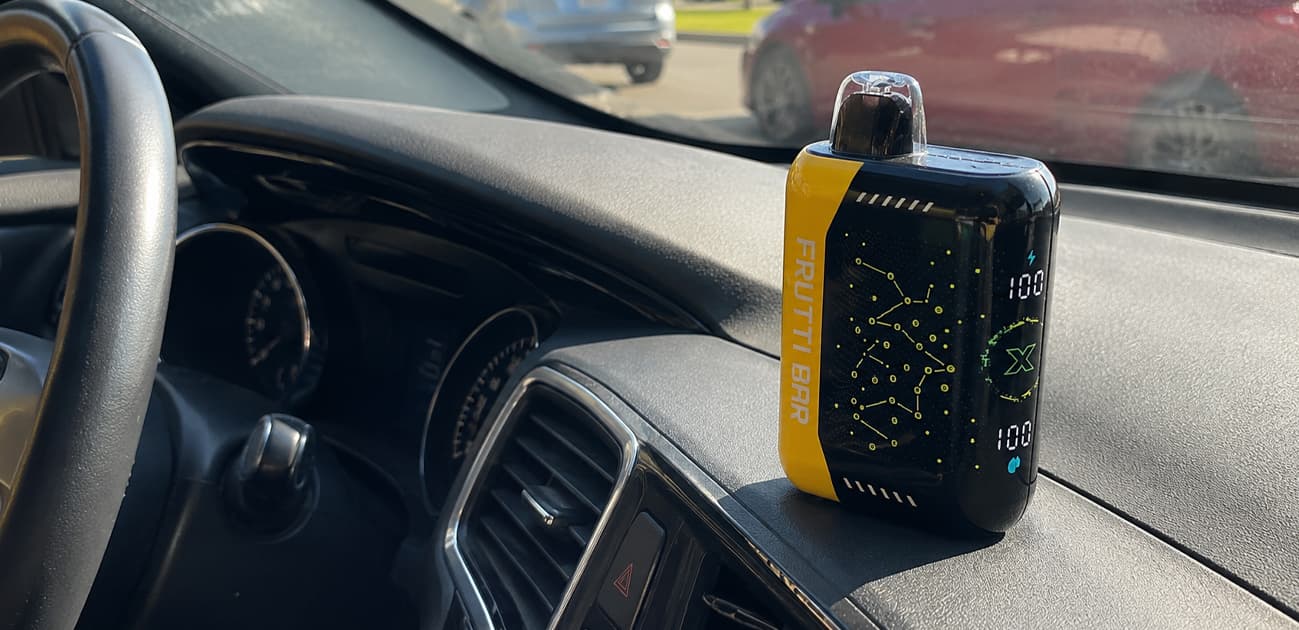
It happens to almost every vaper at some point. You run into a store for five minutes, come back to a car that feels like an oven, and remember your device is sitting in the cup holder. The short answer is that a hot car is one of the worst places you can leave a vape, and the damage can range from a ruined flavor to a genuinely dangerous battery failure.
How Hot Does a Parked Car Actually Get?
Car interiors heat up far faster than most people expect. On a mild 90 degree Fahrenheit day, the inside of a parked vehicle can climb to 120 to 140 degrees Fahrenheit within about an hour, and direct sunlight through the windshield pushes that number even higher. Windows cracked open barely slow the process down. That range sits well outside the safe zone for both the battery and the e-liquid packed into a disposable or refillable device.
Never leave a vape plugged in to charge inside a hot car. Combining external heat with the heat generated during charging is one of the fastest ways to push a lithium-ion battery into failure.
What Heat Does to the Battery
Every vape, disposable or rechargeable, runs on a lithium-ion or lithium-polymer battery, and that chemistry is genuinely sensitive to temperature. As the cell heats up, the internal chemical reactions speed up and the battery discharges faster, which is why a device left in a hot car often shows up dead or badly drained. Sustained exposure above roughly 140 degrees Fahrenheit starts to stress the cell, and once temperatures climb past 180 degrees Fahrenheit the risk of a short circuit inside the battery, known as thermal runaway, rises sharply. In that scenario internal temperatures can spike within seconds, leading to swelling, venting, or in rare cases fire.
Even short of a worst-case failure, heat causes a battery to swell as the electrolyte inside begins to vaporize and build internal pressure. A swollen battery is a device that should be retired, not used again.
What Heat Does to the E-Liquid
The liquid side of the equation takes damage too, just less dramatically. Heat thins e-liquid, which puts pressure on seals and pod connections and makes leaks far more likely. It also speeds up the breakdown of the VG and PG base along with the nicotine and flavoring, so a device that sat in a hot car often tastes flat, harsh, or noticeably different once you finally take a pull. That change is permanent. Cooling the device back down does not restore the original flavor or nicotine strength.
Safe Storage Temperature Range
| Condition | Approximate Temperature | Effect on Vape |
|---|---|---|
| Recommended storage range | 14°F to 86°F (-10°C to 30°C) | Safe for battery and e-liquid |
| Battery stress begins | Above 140°F (60°C) | Faster discharge, early swelling risk |
| Thermal runaway risk zone | Above 180°F (82°C) | Venting, rupture, or fire possible |
| Parked car, 90°F outside, 1 hour | 120°F to 140°F (49°C to 60°C) | Already outside the safe range |
Signs Your Vape Has Been Heat Damaged
- The device feels warm or hot to the touch well after being removed from the car
- A swollen, puffy, or misshapen battery compartment or pod
- E-liquid leaking around the mouthpiece or airflow vents
- A noticeably weaker, flat, or off flavor compared to normal
- A blank or flickering LED screen on devices that use one
- The device no longer holds a charge the way it used to
If you notice swelling in particular, stop using the device immediately. A swollen lithium-ion cell is not safe to charge or continue vaping, even if it still technically works.
How to Protect Your Vape in the Car
- Take the device with you whenever possible, even for a quick errand
- If you must leave it, store it in an insulated lunch bag or small cooler out of direct sunlight
- Use a windshield sunshade to lower the overall cabin temperature
- Keep the device in the glove compartment or center console rather than on the dash or seat
- Never leave a vape plugged into a car charger unattended
- On a hot day, run the air conditioning for a few minutes before using a device that was left in the car
An insulated bag or cooler is not a perfect fix for all-day storage, but it does buy a meaningful buffer against a temperature spike during a short stop.
Cold Cars Are a Problem Too
Extreme cold is not as dangerous as extreme heat, but it is not harmless either. Very low temperatures can temporarily reduce battery output and thicken e-liquid, which sometimes shows up as weaker vapor production until the device warms back up. The same 14 to 86 degree Fahrenheit range that protects against heat damage also covers the cold end, so the safest habit is simply keeping your device with you rather than in the car in any season.
Frequently Asked Questions
Can you leave a vape in a hot car?
You should not leave a vape in a hot car, even briefly. A parked car can reach 120 to 140 degrees Fahrenheit within an hour on a mild 90 degree day, which is far above the safe storage range for the lithium-ion battery and e-liquid inside most vapes.
What temperature is too hot for a vape?
Most manufacturers recommend keeping vapes between 14 and 86 degrees Fahrenheit. Lithium-ion batteries start to experience real stress above 140 degrees Fahrenheit, and the risk of venting or thermal runaway climbs sharply once temperatures pass 180 degrees Fahrenheit.
Can a vape explode from heat in a car?
Yes, it is possible. Extreme heat can trigger a short circuit inside the battery known as thermal runaway, where internal temperatures spike rapidly and can cause venting, fire, or rupture. This is rare, but hot cars create exactly the conditions that make it more likely.
How can I safely store my vape in the car?
If you must leave a vape in a vehicle, keep it in an insulated bag or small cooler out of direct sunlight, use a windshield sunshade to lower cabin temperature, and never leave it plugged in to charge. Taking the device with you is always the safer option.
This article is for general informational purposes only and does not constitute safety, legal, or medical advice. Nicotine is an addictive chemical. Intended for adults 21+ only.