A disposable vape pulled from the back of a drawer will not make you sick the way spoiled food would, but it can taste flat, hit weak, or refuse to power on at all. Vapes do expire in a real sense, just not the way perishable goods do. Two things drive it: the e-liquid inside slowly breaks down, and the battery loses capacity over time whether the device gets used or not.
Do Vapes Actually Expire?
The short answer is yes. Unlike food, a vape past its prime will not grow mold or become dangerous to consume just from age. Instead, quality drops in two separate ways at once. The e-liquid degrades chemically as its ingredients react with air, light, and heat over time. Independently, the lithium-ion battery inside a disposable or rechargeable device self-discharges and loses a small amount of capacity every month, even sitting untouched in a drawer. Neither process happens overnight, but both are steady and irreversible.
How Long Does a Vape Actually Last?
| Component | Typical Shelf Life | What Drives the Decline |
|---|---|---|
| Unopened e-liquid | 1 to 2 years from manufacturing | Nicotine oxidation, flavor breakdown |
| Sealed disposable vape | 12 to 24 months from manufacturing | Combined e-liquid and battery degradation |
| Lithium-ion battery (unused) | Gradual loss from day one | Natural self-discharge over time |
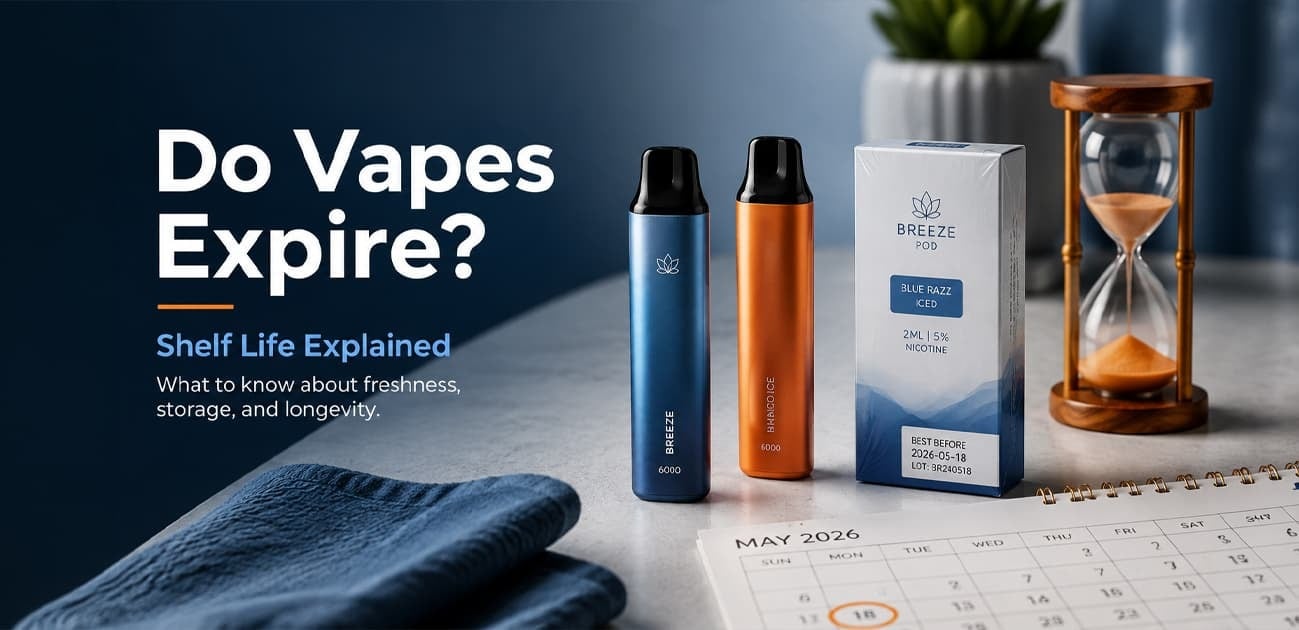
Many brands stamp a manufacturing date or batch code on the packaging rather than a clear expiration date. If you only see a manufacturing date, it is safe to treat the device as good for roughly 12 to 18 months from that point under normal storage conditions.
What Happens to E-Liquid Over Time
Nicotine is the most sensitive ingredient in any e-liquid. As it sits, it slowly oxidizes, reacting with the small amount of air inside the tank. That process gradually turns the liquid a darker shade of brown or amber and shifts the taste toward something sharper and more peppery than the flavor you started with. The sweeter, more delicate notes in a flavor profile tend to fade first, which is why an old device often tastes muted or generic compared to a fresh one. In more advanced cases, the liquid can also thicken or separate, which affects how well it wicks through the coil.
What Happens to the Battery Over Time
Lithium-ion batteries lose a small percentage of their capacity every month, a process called self-discharge, and it happens whether or not the device is ever used. A disposable vape that sat on a store shelf or in a drawer for a year may already have noticeably less battery capacity than it did when it was new, even if the e-liquid inside is still in good shape. That is one reason why a device can taste fine on the first few puffs but run out of battery well before the e-liquid is gone.
Signs Your Vape Has Expired
- E-liquid that looks noticeably darker than when you bought it
- A harsh, sharp, or peppery taste in place of the usual flavor
- Flavor that feels muted, flat, or generic compared to a fresh device
- Weaker vapor production even on a full charge
- Gurgling, spitting, or leaking that was not there before
- A battery that will not hold a charge or power on at all
One of these on its own is not necessarily a problem, but seeing several together is a good sign the device has reached the end of its useful life.
How to Store Vapes and E-Liquid Properly
- Keep devices and bottles upright in a cool, dark, dry place, ideally between 59 and 77 degrees Fahrenheit
- Avoid direct sunlight and humid spots like bathrooms or windowsills
- Never store a vape in a hot car, even for a short errand
- Keep bottles and sealed devices closed to limit air exposure, which slows oxidation
- Use older stock first if you keep more than one device or bottle on hand
Does Heat Speed Up Expiration?
Heat is the single biggest factor that accelerates both failure points at once. It speeds up nicotine oxidation in the e-liquid and adds extra strain to the battery, shrinking its usable life faster than time alone would. This is the exact same mechanism behind two other risks we have covered: leaving a vape in a hot car, where extreme heat threatens the battery directly, and why vapes leak in summer, where heat thins the liquid and builds internal pressure. A device that sees regular heat exposure will reach the end of its shelf life well ahead of the 12 to 24 month range, regardless of what the packaging says.
Storing a device upright in a cool, shaded spot does double duty. It slows e-liquid oxidation and battery wear, and it also reduces the leak risk that comes from heat and improper positioning.
Is It Safe to Vape an Expired Device?
Using an expired vape is generally not dangerous by itself. The main downside is a noticeably worse experience: duller flavor, a harsher throat hit, and less vapor. The real safety concern is a battery that has swollen, cracked, or started leaking with age, which can happen independently of how old the e-liquid is. If you notice any physical damage to the battery compartment, stop using the device right away rather than trying to get the last few puffs out of it.
A swollen or visibly damaged battery is not safe to charge or continue vaping, even if the device still appears to work. Dispose of it through a proper battery recycling program rather than the regular trash.
Frequently Asked Questions
Do vapes actually expire?
Yes, but not the way food spoils. The e-liquid inside degrades through nicotine oxidation, which dulls the flavor and darkens the color, and the lithium-ion battery slowly loses capacity even if the device is never used. Most disposable vapes are good for about 12 to 24 months from their manufacturing date when stored properly.
How can I tell if my vape has expired?
Look for e-liquid that has turned noticeably darker, a harsh or peppery taste instead of the usual flavor, weaker vapor production, or a battery that will not hold a charge. Any one of these on its own can happen occasionally, but several together usually mean the device is past its best.
Is it safe to vape an expired disposable?
An expired device is generally not dangerous to use, but the experience gets noticeably worse as flavor fades and the nicotine hit weakens. The bigger safety concern is a swollen or leaking battery, which can happen with age regardless of e-liquid condition, and that is a reason to stop using the device immediately.
How should I store vapes and e-liquid to make them last longer?
Keep devices and bottles upright in a cool, dark, dry place, ideally between 59 and 77 degrees Fahrenheit. Avoid direct sunlight, humidity, and hot environments like a car or a windowsill, since heat is the single biggest factor that speeds up both e-liquid degradation and battery wear.
This article is for general informational purposes only and does not constitute product warranty or safety advice. Nicotine is an addictive chemical. Intended for adults 21+ only.