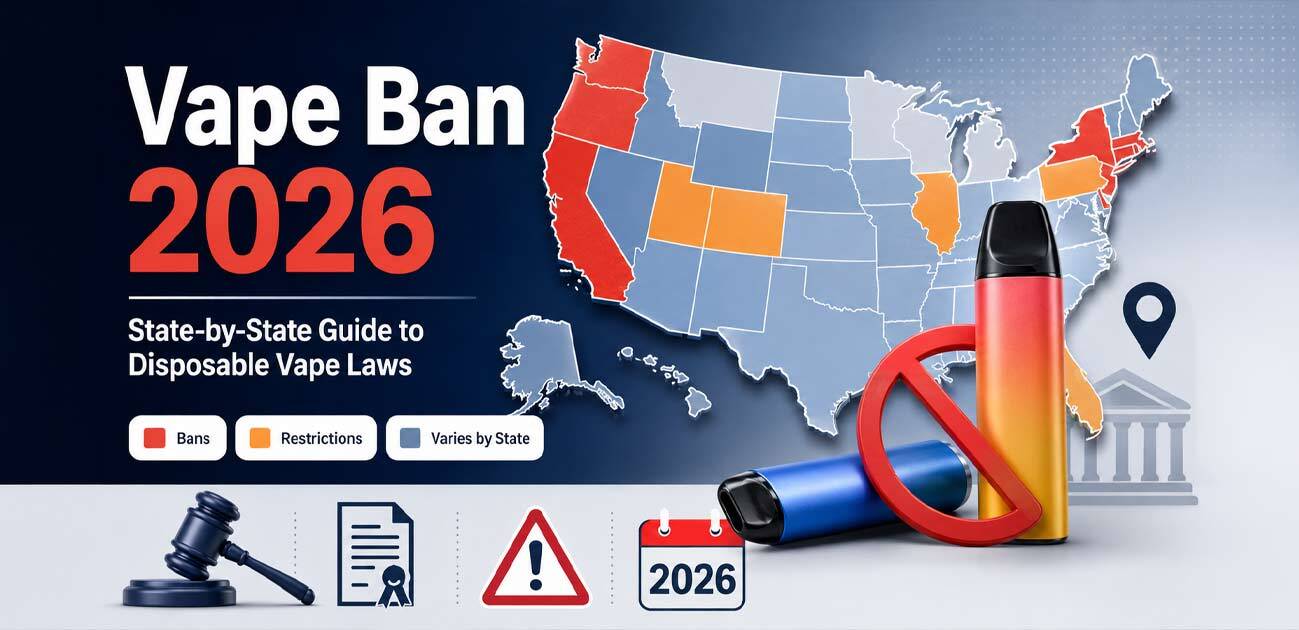
The phrase "vape ban" gets used loosely, and that causes a lot of confusion. As of 2026, there is no nationwide ban on vaping in the United States. What is actually happening is a patchwork of state-level restrictions - flavor bans, approved-product registries, and rules targeting disposables - that vary widely from one state to the next.
This guide breaks down the three regulatory models states are using, which states fall under each, and what is still legal. Because these laws change quickly, we note the date of this update and recommend verifying your state's current rules before buying.
Disclaimer: This article is for general information only and is not legal advice. Vape laws change frequently and enforcement varies by state and locality. Always verify current regulations with your state's official resources before making any purchasing decisions.
Is there a nationwide vape ban in 2026?
No. There is no federal law banning all vapes. Vaping remains legal across the country under the federal minimum age of 21 and FDA regulatory oversight. The FDA has authorized 39 e-cigarette products for legal sale as of early 2026, all of them tobacco or menthol flavored, but unauthorized does not automatically mean banned - it means the product has not completed the FDA's review process.
The restrictions making headlines are at the state level. A vape that is legal in one state may be unavailable across the border. For consumers, that state patchwork is what "vape ban" really means in 2026.
Why states are restricting vapes
States cite a few consistent reasons for tightening vape rules:
- Youth access. The most cited concern. Sweet flavors and disposable devices have been popular among underage users, prompting lawmakers to act.
- Product oversight. Thousands of vape products entered the market without federal authorization, creating enforcement and safety challenges.
- Environmental waste. Single-use disposables with lithium batteries end up in landfills, which has become a growing argument for device-format restrictions.
Rather than wait on slower federal processes, states have stepped in with their own models - and those models are what determine which products you can actually buy.
The three regulation models
Almost every state restriction falls into one of three categories. Understanding these makes the whole map easier to read.
-
Model 1 - Flavor bansOnly tobacco-flavored vapes allowed
These states prohibit the sale of vapes in any flavor other than tobacco, and usually menthol too. Fruit, candy, dessert, and mint products are removed from shelves - even from legally manufactured brands. This is the most direct form of restriction.
-
Model 2 - Registry and directory systemsOnly state-approved products allowed
These states maintain an official directory of vapes that can be sold. To get listed, a product must have FDA authorization or a pending application. Because most disposables do not qualify, this model effectively removes the majority of disposable vapes from the market.
-
Model 3 - Origin bansProducts banned by country of manufacture
The newest approach, used by Texas. Rather than banning flavors or maintaining a registry, it bans disposables based on where they are made - specifically targeting Chinese-manufactured devices while preserving access to refillable hardware and non-targeted products.
Flavor-ban states
As of 2026, the states with full flavor bans on vaping products are:
- California - Proposition 31 bans all flavored tobacco products, including vapes. In effect since December 2022.
- Massachusetts - One of the earliest comprehensive flavor bans, including menthol, in effect since 2020.
- New Jersey - Bans all flavors other than tobacco.
- New York - Bans flavored vapes other than tobacco and, in practice, restricts menthol.
- Rhode Island - Bans flavored vape products.
- Colorado - Flavor restrictions in effect since 2024.
In these states, even a legally manufactured, brand-name vape is prohibited if it carries a restricted flavor. Oregon and Washington have also enacted narrower flavor restrictions.
Registry and directory states
A growing number of states restrict sales to products on a state-approved directory tied to FDA authorization. These laws have been spreading quickly through 2026:
- Wisconsin - Restricts sales to listed products.
- North Carolina - Directory-based restriction.
- Florida - Uses a directory model that bans many flavored disposables.
- Tennessee - Established a Vapor Product Directory in early 2026, requiring PMTA-based authorization.
- Mississippi - Passed HB 916, a PMTA registry law that removes most non-authorized disposables.
- Alabama - Enacted a registry companion bill (HB 8) in May 2026.
The practical effect of the registry model is similar to a disposable ban: because most disposable brands have not completed FDA authorization, they cannot be listed, and therefore cannot be sold legally in these states.
Origin-ban states
Texas took a different path with Senate Bill 2024. Instead of banning flavors or building a registry, it bans disposable vapes manufactured in China. The law targets the supply chain directly while preserving adult access to refillable devices and non-Chinese-made products. Texas also banned devices with imagery designed to appeal to minors - anything shaped like toys, smartphones, or school supplies.
State-by-state summary table
A quick-reference view of the main restriction states as of June 2026. This is a guide, not legal advice - verify with your state before purchasing.
| State | Model | What it restricts |
|---|---|---|
| California | Flavor ban | All flavors except tobacco (Prop 31) |
| Massachusetts | Flavor ban | All flavors including menthol |
| New Jersey | Flavor ban | All flavors except tobacco |
| New York | Flavor ban | All flavors except tobacco |
| Rhode Island | Flavor ban | Flavored vape products |
| Colorado | Flavor ban | Flavor restrictions (2024) |
| Wisconsin | Registry | Only directory-listed products |
| North Carolina | Registry | Only directory-listed products |
| Florida | Registry | Directory bans many disposables |
| Tennessee | Registry | PMTA-based directory (2026) |
| Mississippi | Registry | PMTA registry (HB 916) |
| Alabama | Registry | Registry law (HB 8, 2026) |
| Texas | Origin ban | Chinese-made disposables (SB 2024) |
This list is moving fast. More than 30 flavor-ban and registry bills were under consideration across state legislatures during 2026. States like Nevada, Maine, and South Carolina have active bills. Always check your state's current status - a state not on this list today may have new rules tomorrow.
What's still legal and where
Roughly 20 states have minimal vaping-specific regulation beyond the federal baseline - meaning disposables and flavored products remain widely available. In those states, buying from a licensed, reputable retailer is straightforward.
A few things remain consistent nationwide:
- Refillable hardware stays legal everywhere. Even in flavor-ban and registry states, refillable devices are generally compliant - though the e-liquid you can buy may be restricted.
- The federal age minimum is 21 in every state.
- Online sales follow the PACT Act, which requires age verification and adult-signature delivery. Some restrictive states block shipments of non-compliant products.
For consumers in restricted states: If flavored disposables are unavailable where you live, the common compliant alternatives are tobacco-flavored authorized products, refillable systems, or - where legal - zero nicotine options. Buying from unlicensed or black-market sellers carries real risks, including inconsistent quality and no safety oversight.
FAQ
No. There is no federal law banning all vapes. Vaping remains legal nationwide under age-21 restrictions and FDA oversight. The restrictions making news are at the state level and target flavored products, disposables, or unauthorized products - not vaping itself.
As of 2026, the full flavor-ban states are California, Massachusetts, New Jersey, New York, Rhode Island, and Colorado. These laws prohibit vapes in any flavor other than tobacco, and usually menthol too, for both in-store and online sales within those states.
There is no federal ban on disposables. But registry states like Wisconsin, North Carolina, Florida, Tennessee, Mississippi, and Alabama restrict sales to approved products, which removes most disposables. Texas bans Chinese-made disposables specifically. In roughly 20 states, disposables remain widely available.
In most states, yes. Online sales follow the federal PACT Act, which requires age verification and adult-signature delivery. States with flavor bans or registries may block shipments of non-compliant products. Always check your state and local laws before ordering.
Refillable hardware remains legal in every state, making it the most reliably compliant format. In flavor-ban states, the e-liquid you can purchase may be restricted to tobacco flavors, but the devices themselves are generally not banned.
WARNING: This product contains nicotine. Nicotine is an addictive chemical. For adults 21+ only. This article is informational and not legal advice - verify current laws in your state before purchasing.