This is one of the most debated questions in public health, and honestly, the evidence does not point in one single, simple direction. Some respected reviews find real benefits to switching from cigarettes to vaping. Other major health organizations urge caution and say more research is needed. Here is a straightforward look at where researchers agree, where they still disagree, and what that actually means depending on your situation.
The One Point Nearly Everyone Agrees On
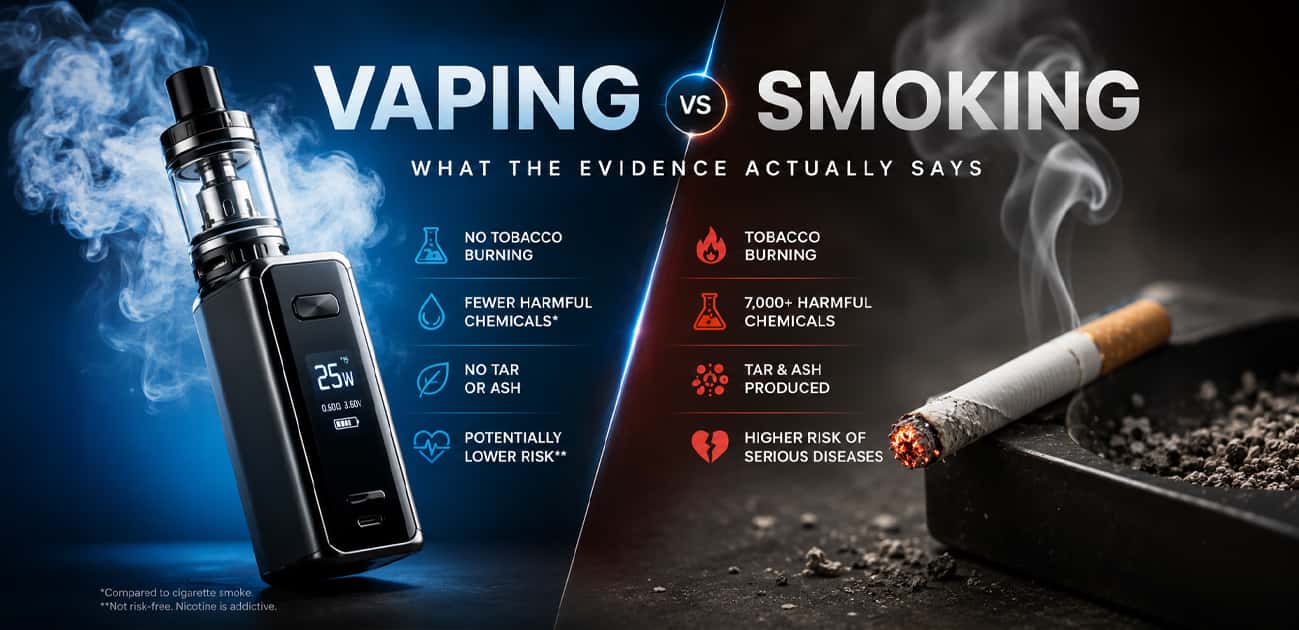
Across public health bodies, medical institutions, and independent researchers, there is broad agreement on this much: burning tobacco is the primary source of harm in cigarette smoke. Combustion produces thousands of chemicals, many of them known carcinogens, along with tar and carbon monoxide that vaping does not produce because nothing is being burned. Smoking remains the leading cause of preventable death in the United States, linked to cancer, heart disease, and chronic lung disease that develops from decades of cumulative damage. On this specific point, the comparative harm profile of combustion versus vaporization, there is genuine scientific consensus.
Less Harmful Does Not Mean Harmless
Where the agreement ends is the leap from "less harmful than smoking" to "safe." Vaping is still relatively new, and researchers are candid that long-term data spanning multiple decades, the kind that exists for smoking, simply does not exist yet for vaping. Current research links vaping to respiratory irritation, and some studies show increased bronchial reactivity and a higher incidence of respiratory symptoms in vapers compared to people who have never used nicotine products. A large 2026 study published in Nature Medicine also found that people who switched from cigarettes to e-cigarettes had a higher lung cancer risk than people who quit tobacco and nicotine use entirely, suggesting that switching may reduce some of the benefit of quitting rather than matching it. Vaping should be understood as an evolving area of research, not a settled, risk-free alternative.
E-liquid is also a real poisoning risk, particularly for young children. More than 80% of poison control calls related to e-cigarettes involve children under 5, typically from swallowing or skin contact with liquid nicotine. Store devices and e-liquid out of reach of children and pets.
What the Research Says About Quitting With Vapes
This is genuinely one of the more contested areas, and it is worth presenting both sides honestly rather than picking one.
Evidence supporting vaping as a quit aid: A widely cited Cochrane review analyzing over 100 studies and roughly 30,000 adult smokers found that nicotine e-cigarettes were associated with higher quit rates than traditional nicotine replacement therapy like gum or patches. A separate analysis of longitudinal survey data found that daily e-cigarette use was linked to smokers being significantly more likely to have quit smoking entirely by the end of the study period.
Reasons for caution: Despite that evidence, the FDA has not approved e-cigarettes as a smoking cessation method, and no manufacturer is currently seeking that approval. The CDC states there is insufficient evidence to confirm vaping helps people quit smoking, and the American Heart Association points to proven cessation methods, like counseling and FDA-approved nicotine replacement therapy, as the recommended path instead. The 2026 Nature Medicine finding on lung cancer risk in switchers adds another layer of caution to the picture.
The honest summary: some credible research supports vaping's role in helping smokers quit, but it does not carry the same regulatory approval or long-term evidence base as established cessation methods, and switching is not the same as quitting nicotine altogether.
Nicotine Addiction: The Common Thread
Both cigarettes and most vapes deliver nicotine, and nicotine is addictive regardless of the delivery method. Switching from smoking to vaping typically means trading one nicotine delivery system for another, not eliminating nicotine dependence. Some vapers use the switch as a step toward gradually reducing nicotine strength over time, but that is a personal strategy, not a guaranteed outcome, and it requires intention rather than happening automatically.
Dual Use: The Combination That Concerns Experts Most
A meaningful share of vapers, by some estimates around 60% of adult vapers, also continue smoking cigarettes rather than fully switching, a pattern researchers call dual use. This is the pattern health experts flag most consistently as concerning. Studies on dual use generally show it does not reduce health risks the way a full switch away from cigarettes does, and in some measures, like respiratory symptom risk, dual users look statistically similar to people who only smoke rather than people who only vape. If there is a harm-reduction case for vaping among smokers at all, the available evidence suggests it applies specifically to fully replacing cigarettes, not adding vaping alongside them.
Who Should Not Vape
- Anyone who has never smoked or used nicotine products, since there is no harm-reduction rationale for starting nicotine use from zero
- Minors, whose brains continue developing until around age 25 and are more vulnerable to nicotine's effects on attention, mood, and impulse control
- People who are pregnant or breastfeeding
- Anyone with a history of heart disease, high blood pressure, or other conditions where a healthcare provider has advised against nicotine use
If You Are a Smoker Considering the Switch
If you currently smoke and are weighing whether to switch to vaping, a few points from the research above are worth keeping in mind. The potential benefit researchers describe applies to fully replacing cigarettes, not using both. Vaping is not an FDA-approved cessation method, so it should be considered alongside, not instead of, a conversation with a healthcare provider about proven options like counseling and approved nicotine replacement therapy. And "less harmful than smoking" is a comparative statement, not a claim that vaping carries no risk of its own.
Talking to a doctor or pharmacist before making a change costs nothing and gives you access to cessation resources and support that go beyond any single product, vaping included.
Frequently Asked Questions
Is vaping actually less harmful than smoking?
Most public health researchers agree that vaping exposes users to far fewer of the toxic combustion byproducts found in cigarette smoke, since it does not involve burning tobacco. That said, less harmful does not mean harmless. Vaping still delivers nicotine and other chemicals whose long-term effects are not fully understood.
Can vaping actually help someone quit smoking?
The evidence is genuinely mixed. Some Cochrane reviews found that nicotine e-cigarettes led to higher quit rates than traditional nicotine replacement products like gum or patches. However, the FDA has not approved e-cigarettes as a smoking cessation aid, and organizations like the CDC and American Heart Association say more evidence is needed. Anyone trying to quit should talk to a healthcare provider about all their options.
Is it worse to smoke and vape at the same time?
Research on dual use, meaning smoking and vaping at the same time, generally shows it does not lower health risks the way fully switching does, and some studies associate it with health outcomes closer to smoking alone than to vaping alone. Most of the potential benefit associated with switching appears tied to fully replacing cigarettes rather than using both.
Should someone who has never smoked start vaping?
No. The comparative harm reduction argument for vaping applies specifically to people who already smoke cigarettes. Nicotine is addictive on its own, and health authorities including the CDC advise that anyone who does not currently use tobacco or nicotine products should not start vaping.
This article is for general informational purposes only and does not constitute medical advice. It is not intended to encourage vaping among non-smokers or minors. If you smoke and are considering your options, talk to a healthcare provider. Nicotine is an addictive chemical. Intended for adults 21+ only.